- Date:
2026 Global Assembly on Food and Climate: Methodology and Outputs Report
A full account of how the Assembly was designed and delivered, and of what its Members produced.
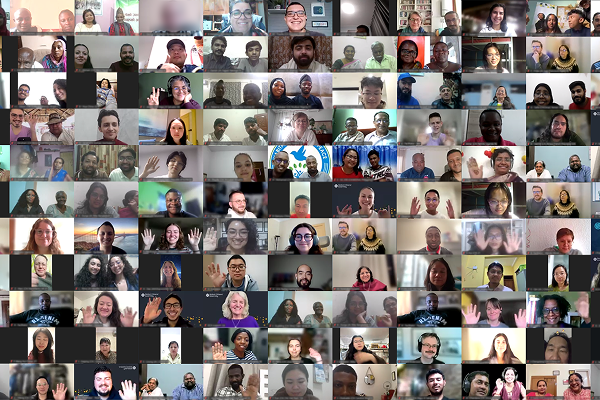
The 2026 Global Assembly on Food and Climate brought together 105 people from 60 countries and territories to address a single question: what changes, if any, should we make to how we grow, share, eat and use food, so that everyone has enough to nourish themselves, while tackling the causes and impacts of climate change?
Selected through a two-stage lottery, the Assembly Members formed a miniature version of the global population across geography, age, gender, education, rural and urban environments, climate risk exposure and initial opinion on the topic. Supported locally by 105 Community Hosts, they deliberated online for 42 hours over seven weeks, working through the trade-offs that sit at the heart of global food and climate governance.
The Methodology and Outputs Report sets out how this was achieved. It describes the global civic lottery, multilingual and asynchronous deliberation across 22 time zones and over 50 languages, and the synthesis and decision-making methods used to bring many voices together without forcing consensus. It also documents the work of a delivery team of around 350 people from over 80 countries.
The report concludes with a full record of the Assembly’s outputs: 22 Calls to Action for actors ranging from farmers and agribusiness to schools, NGOs and governance institutions.
As the second global-scale citizens’ assembly in history, the 2026 Assembly offers lessons for those designing deliberation at this scale. The report is a technical account rather than an analytical reflection. It is published in the interest of transparency and shared learning, to enable constructive scrutiny and to support future approaches to making collective decisions on shared, global issues.
Read the Methodology and Outputs Report