Global assemblies

Anyone on Earth can shape the decisions that affect us all. A global assembly brings together people from around the world to engage on complex issues and contribute to global decision-making and action.

GCA Global Assembly

What is a global assembly?

Global assemblies are part of the wider Global Citizens’ Assembly. Using a democratic lottery, they bring together a group of people that broadly reflects the diversity of the world’s population.

Together, participants (known as assembly members) explore major global challenges focusing on issues where existing governance systems are struggling to respond effectively. Through guided discussions, expert input, and lived experience, the assembly creates space for deep deliberation around issues that affect people across borders and generations.

The Global Assembly on Food and Climate

105 people from more than 60 countries. 
One shared vision for food and climate.

Over the last 12 months, the Global Citizens' Assembly supported Brazil’s COP30 Presidency and its Mutirão initiative to establish a Citizens’ Track. We worked together towards a People’s COP that places participation and collective intelligence at the center of climate governance.

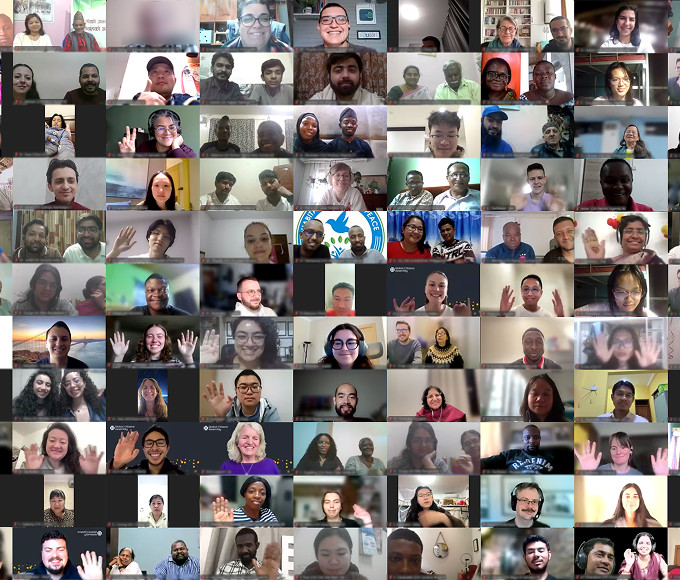
The Global assembly on Food and Climate focused on the future of food systems in the context of climate change. It brought together 105 people from more than 60 countries and all walks of life. Different ages, genders, cultures, and lived experiences. They met online, listened to each other, and to experts, questioned and challenged until they reached consensus. 

Local knowledge met global perspectives and every story helped build solutions grounded in personal experiences. Clear, fair and workable solutions that ensure everyone has access to nutritious food while responding to the causes and impacts of climate change.

Topic framing

Reflecting Brazil’s role as a major food producer and steward of globally significant ecosystems, the assembly focused on key dilemmas surrounding food systems governance and climate change.

The main question asked was:

“What changes, if any, should we make to how we grow, share, eat, and use food, so everyone has enough to nourish themselves, while tackling the causes and impacts of climate change?”
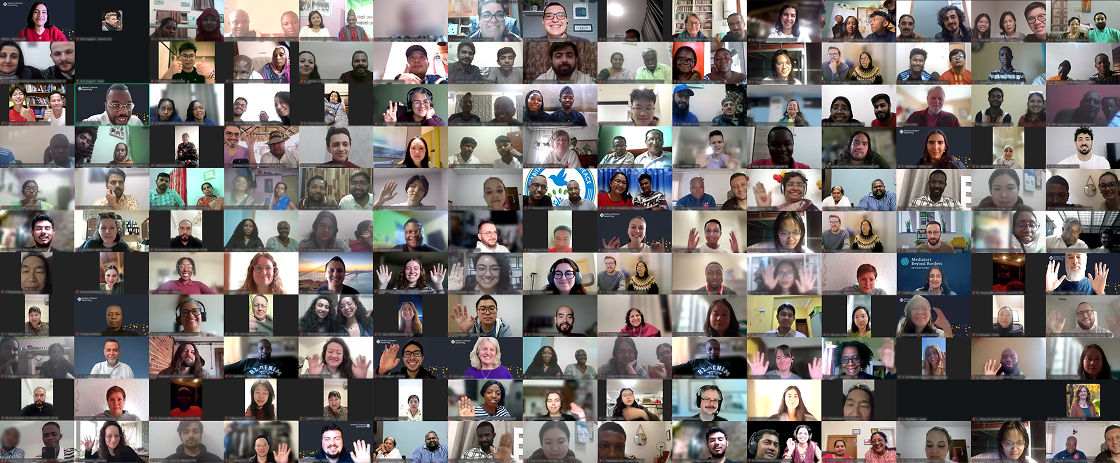
https://admin.globalassemblies.org/uploads/GCA-Global-Assembly-on-Food-and-Climate.png

Global Assembly on Food and Climate, 2026

Outputs and impact

The recommendations developed by the Global assembly on Food and Climate are 22 Calls to Action shaped through structured learning, discussion, and collective decision-making. They reflect how everyday people from different cultural contexts and lived experiences identified what matters most, what feels fair, and what could realistically move forward.

Together, they offer grounded perspectives intended to support deliberation at all levels, from local communities and institutions to national governments and global processes.

Whats App Image 2026 04 03 at 09 58 10 2

Ahmad's Story

What happened when a fisherman from Indonesia’s coast joined the Global Assembly on Food and Climate? For Ahmad Marzuki, it meant taking the realities of declining fish stocks, displacement and community resilience all the way to the international stage.

Read more
Screenshot 2026 06 05 at 12 34 10

Abraham's story

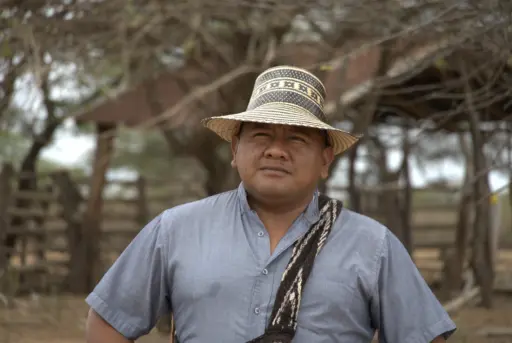
As climate change and food insecurity reshape life in Colombia’s La Guajira region, Wayúu leader Abraham Jayariyu joined the 2026 Global Assembly on Food and Climate to ensure Indigenous knowledge and lived experience are part of the conversations shaping the future of food, climate and global governance.

Read more

How did the Global Assembly on Food and Climate work?

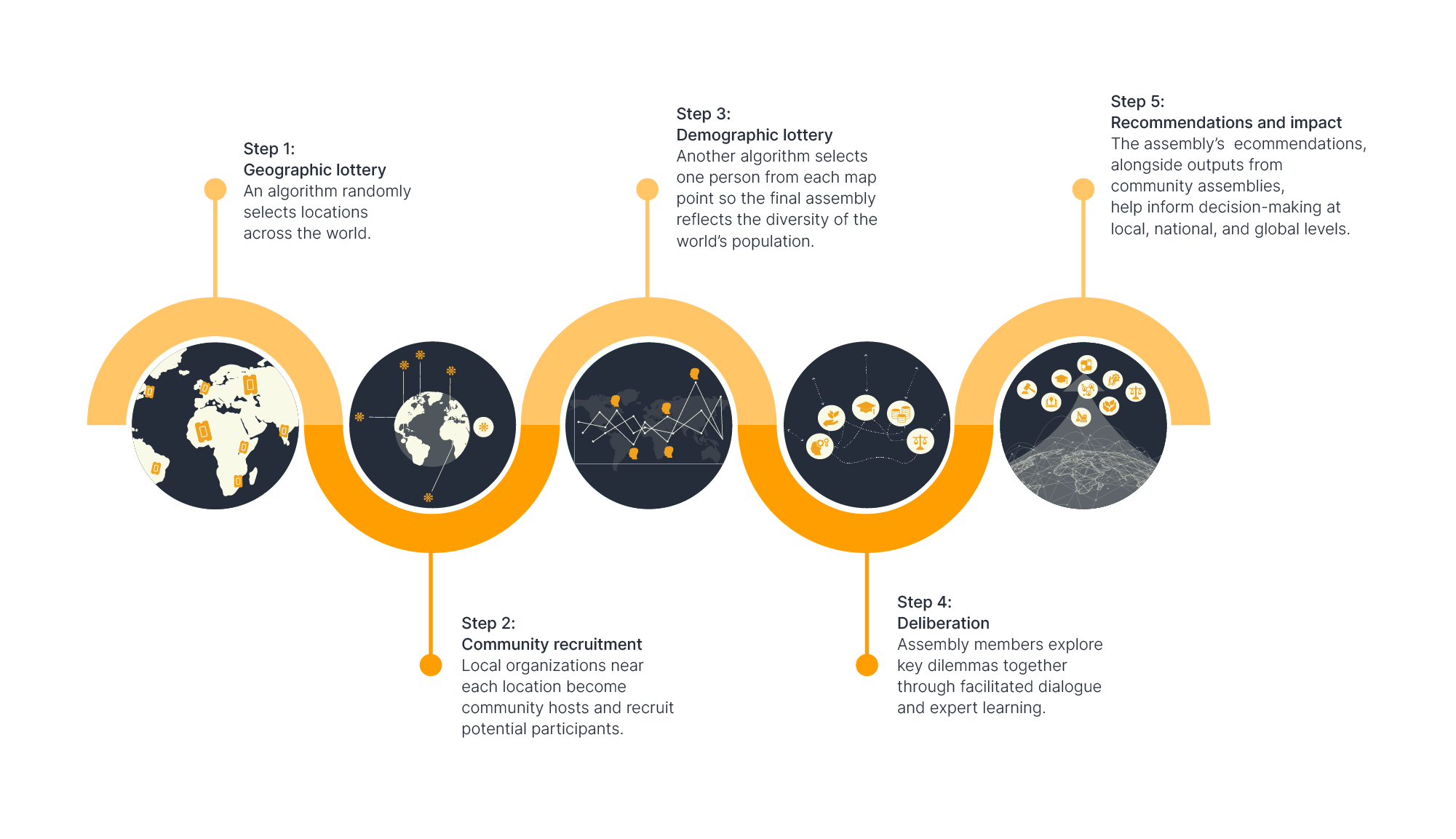
The assembly brought together 105 people from across the world, chosen by lottery to broadly reflect the diversity of the global population.

https://admin.globalassemblies.org/uploads/GCA-Global-process.png

A global process, supported locally.

The Global Assembly on Food and Climate was implemented through a global network that connected individuals and grassroots organizations to the main process which took place online.

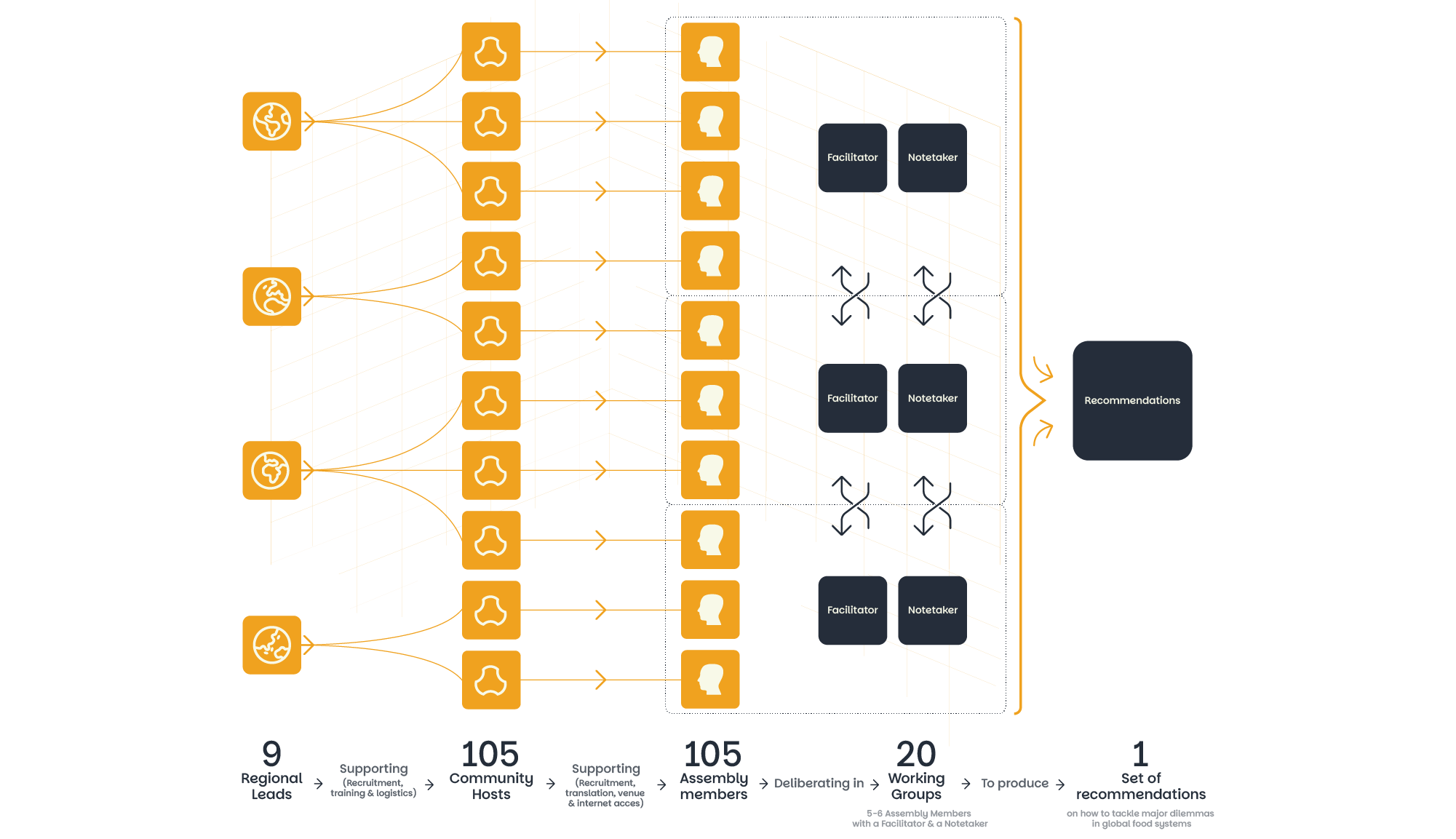
Each assembly member was supported by a local community host who helped with recruitment, provided practical support, translation, and guidance throughout the process. Community hosts worked alongside regional lead partners, facilitators, and notetakers to create inclusive and accessible deliberation across languages, cultures, and time zones.

https://admin.globalassemblies.org/uploads/GCA-Structure.png

Structure

Participants met regularly in working groups designed around time zones, with systems in place to share perspectives across groups and build a sense of collective participation across the assembly as a whole.

Frequently asked questions

What is a global assembly?

A global assembly is made up of people picked by lottery to broadly reflect the diversity of the world’s population. Participants deliberate together on major global challenges and develop recommendations for decision-makers. 

Why are only around 100 people involved?

The goal is not mass participation but meaningful discussion. A smaller group allows for better, intimate conversations while still reflecting global diversity through careful selection.

How are participants selected?

Through sortition – a democratic lottery – designed to reflect diversity in age, gender, geography, income, education, and lived experience.

Do participants need expertise?

No. They bring lived experience. They’re supported by a range of balanced learning materials and expert inputs, allowing them to engage with complex issues in an informed way.

Are participants paid?

Yes. Participants are compensated for their time to ensure the assembly is accessible to people from different economic backgrounds and circumstances and to recognize the time and contribution involved.

How does the global assembly process avoid everyone thinking the same thing?

Through diverse selection, strong facilitation, and structured dialogue, the process brings different perspectives into the discussion so different views are heard. 

What happens when people disagree?

The process creates space for people to explore difficult choices together. The aim isn’t forced consensus, but better understanding and more grounded decision-making.

Can citizens' assemblies scale?

Citizens’ assemblies are designed to grow. Scale comes through connection with the thousands of local assemblies and participatory processes happening around the world today so more people can take part in different ways.