From Wayúu territory to global climate decisions
As climate change and food insecurity reshape life in Colombia’s La Guajira region, Wayúu leader Abraham Jayariyu joined the 2026 Global Assembly on Food and Climate to ensure Indigenous knowledge and lived experience are part of the conversations shaping the future of food, climate and global governance.
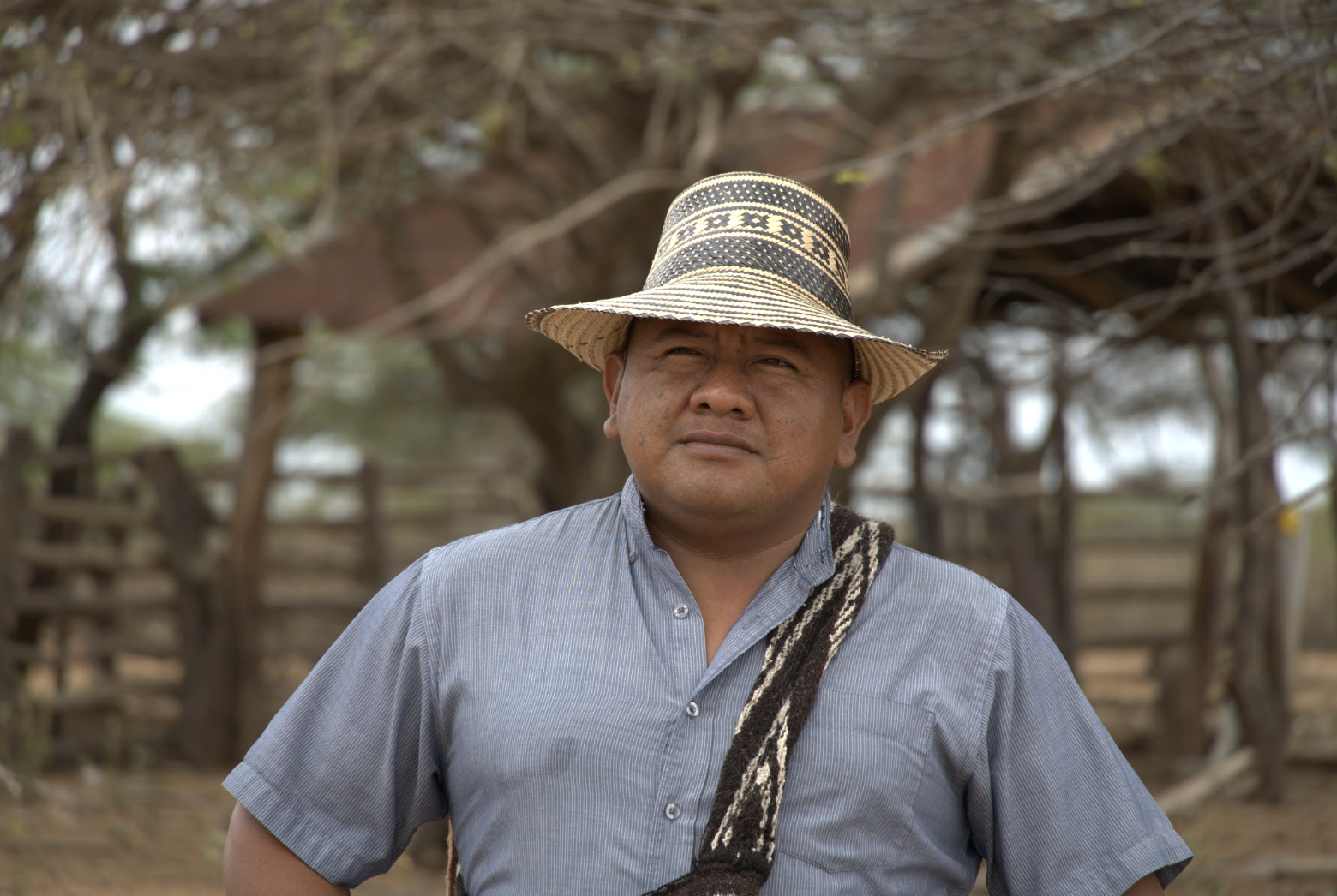
At the northernmost edge of South America, in La Guajira, Colombia, Abraham Jayariyu, wakes without a fixed schedule. His days are guided less by the clock, more by responsibility.
“I wake up, I breathe, and I thank God for that breath,” he says. “Then I think about what needs to be done for my community.”
That sense of duty carries him across different worlds. One day he is in virtual meetings with national organisations, helping shape technical proposals. The next, he is on the ground in La Guajira, where wind farms and long stretches of transmission lines are rapidly reshaping ancestral Wayúu territory.
The Wayúu are one of Colombia’s largest Indigenous nations - more than 380,000 people - and a history in the region that long predates the formation of the modern state.
“We existed before Colombia was even formed,” Abraham says. “For millennia.”
That long history is reflected in their own legal and social system, known as the Wayúu normative system, or Ley Wayúu. It guides community life through traditions passed down across generations, from conflict resolution to daily conduct.
But these systems are now under pressure.
A land under pressure
Across La Guajira, climate change is already being felt. Water is harder to find. Crops fail more often. Food is less secure. The UN World Food Programme reports that more than two-thirds of people in the region face moderate to severe food insecurity. Among Wayúu children, thousands suffer from severe malnutrition, and many die before the age of five.
“We are being affected and we feel it,” Abraham says. “Nature is a living being and what we are seeing is a sign that harm has been done.”
An unexpected invitation
Last December, he received an unexpected invitation to join the Global Citizens’ Assembly on Climate and Food, an initiative designed to put people at the center of global decision-making. Through it, a diverse group of citizens come together to tackle a pressing question: how to make food systems fairer and more resilient in the face of climate change.
“I work with communities, so when I heard about it, I was interested,” he says. “I wanted to understand.”
How the Global Citizens' Assembly works
The selection process aims for global representation. First, an algorithm selects random locations around the world with a slight over-representation of places that are more vulnerable to climate change. In each location, organizers worked with local partners to identify a pool of participants. One person was then selected by lottery (a process known as sortition). Together, they form a group that broadly reflects global diversity across age, gender, income, education and life experience. Abraham was one of them..
Citizens’ assemblies have been slowly gaining ground. In Ireland, they helped change abortion laws. In Austria, an heiress let citizens decide how to spend her $25 million fortune. Today, many European cities use citizens’ assemblies as a regular part of how decisions are made.
The Global Citizens’ Assembly took the approach further, convening participants from around the world to focus on food systems, an area responsible for roughly a third of global greenhouse gas emissions. It brought into the discussion voices that are often absent from international climate negotiations, which tend to take place far from the communities most directly affected.
For seven weeks, from January to March 2026, 105 participants met online, joining two sessions a week across time zones. The group brought together people of all ages, from teenagers to people in their eighties. It included a farmer in Uganda, a student in Brazil, an engineer in Turkey, and small business owners from multiple regions. Some participants grew much of their own food, others relied entirely on complex global supply chains.
The early sessions focused on learning. Participants heard from scientists, policy experts, and Indigenous leaders. They explored how food systems are shaped by climate change, but also by history, economics, and power.
"A strengthening of knowledge"
As the weeks progressed, the conversations became more complex. Participants began grappling with difficult questions, like who should pay for food system transformation and what trade-offs were unavoidable.
“It wasn’t always easy,” Abraham says. “People come with different ideas, different realities.”
But over time, something shifted.
“We are people of dialogue,” he says of the Wayúu. “We like to listen.”
For Abraham, the process felt unexpectedly familiar. “I was always waiting for the next session,” he says. “To hear what others would say.”
Rather than confrontation, he describes the Assembly as accumulation, perspectives layered over time, reshaping how participants understood the system.
“I resonated with many of them,” he says. “Even when we were different, you learn from it.”
He also brought his own perspective into the process. “I highlighted our ancestral wisdom,” he says. “How our elders worked the land, how we produced food, and how we have always had our own ways of sustainability.”
“It was a strengthening of knowledge,” he adds. “You listen, you reflect, you take what is useful.”
22 Calls to Action
By the final week, the focus had moved from dialogue into decision-making. Participants voted on a series of proposals that had been developed over weeks of structured deliberation.
In total, 22 Calls to Action were agreed, each receiving support from more than 80% of the Assembly.
The recommendations spanned practical policy changes, such as clearer sustainability labelling and tighter regulation of harmful chemicals, as well as more structural reforms, including changes to how agricultural subsidies are distributed. Others went further, touching on cultural dimensions of food systems, including the protection of local food traditions.
The Global Citizens’ Assembly has gained global support, from governments and non-governmental organizations. The government of Brazil, which was presiding over the UN climate negotiations last year, endorsed the efforts of the Global Citizens Assembly and invited it to present its recommendations at upcoming international meetings this year. This way, Assembly Members, like Abraham, will get the chance to share their lived experiences at moments they are usually excluded from.
As well as influencing global policy, the assembly is also proving to deliver concrete change on the ground.
Good ancestors
Back in La Guajira, Abraham sees echoes of that work already reaching the ground.
“I keep everything in my memory and I share it with others,” he says. During a recent visit to a rural mountain area, he spoke with farmers about livestock and food production.
“I told them I had been part of a global citizens’ assembly,” he says. “We talked about how meat production can affect the environment and contribute to climate change through greenhouse gases.”
The reaction, he says, was curiosity more than certainty, but the conversation opened something.
For Abraham, that matters. Change, he suggests, doesn’t only move through policy. It moves through people, carrying ideas between local life and global systems.
“We must be good ancestors,” he says.